

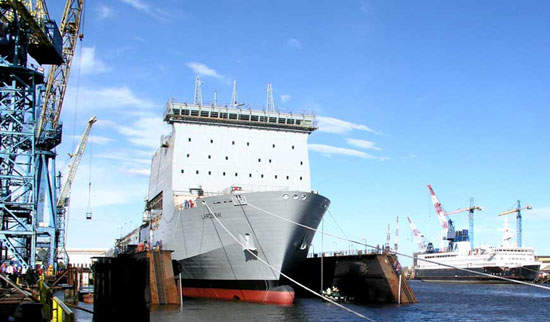
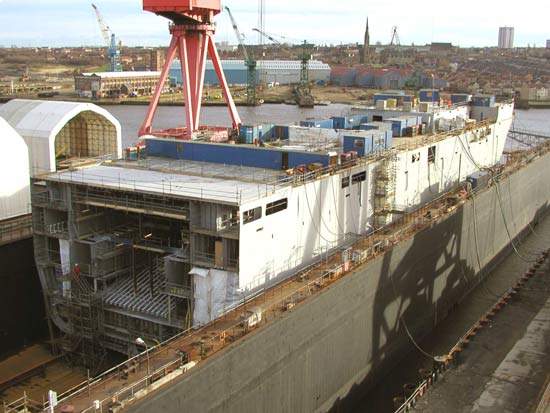
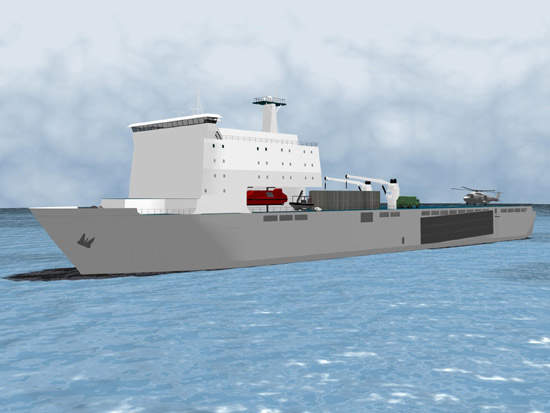
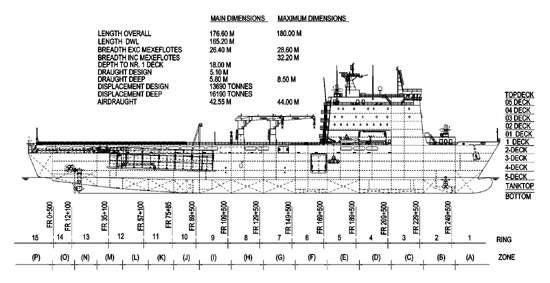
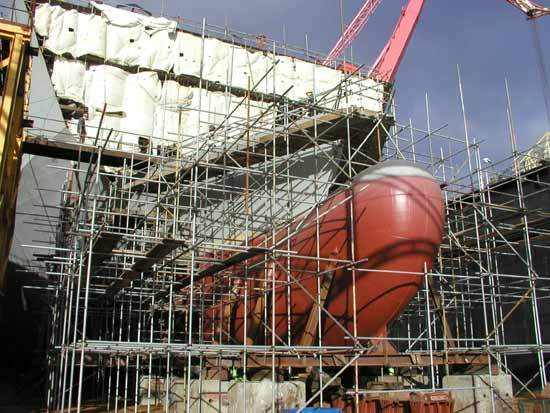
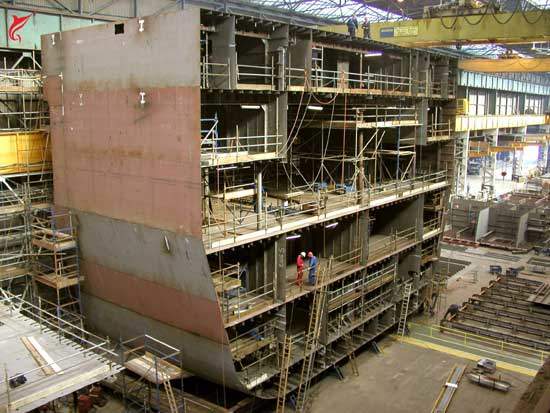
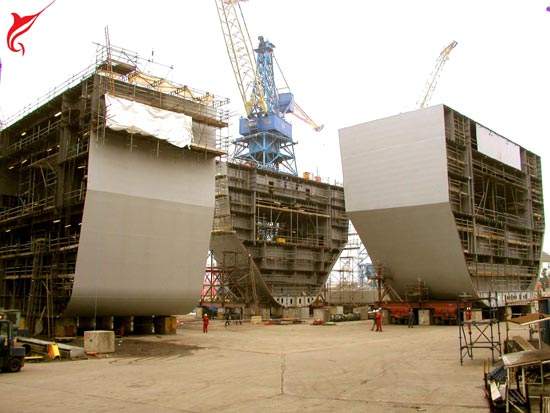
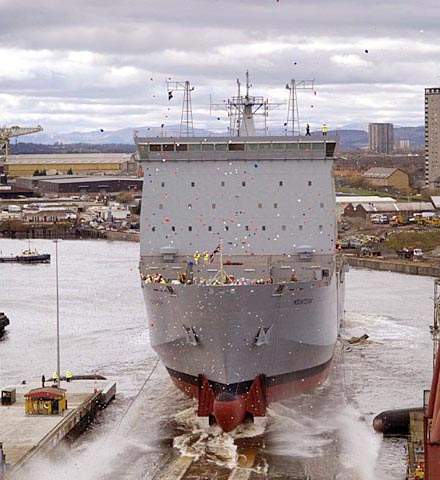
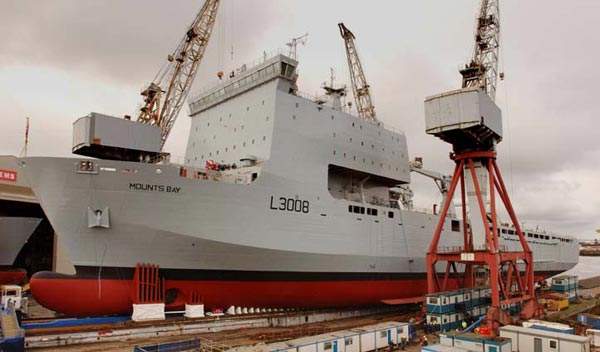
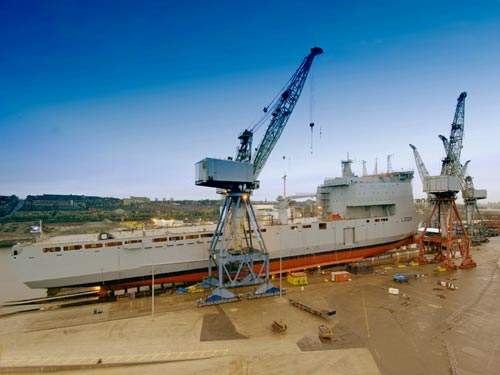

Four Bay Class landing ship dock (auxiliary) vessels (LSD(A)) entered service with the UK Royal Fleet Auxiliary during 2006-2007. Two ships have been built by Swan Hunter (Tyneside) at the Wallsend shipyard, and two by BAE Systems at the Govan shipyard.
Recommended White Papers

Recommended Buyers Guides

RFA Largs Bay (L3006) was launched in July 2003 at Swan Hunter Wallsend and was delivered in April 2006. It entered service in December 2006. RFA Mounts Bay (L3008) was launched in April 2004 at BAE Govan and was the first vessel of the class to enter service with the Royal Fleet Auxiliary in September 2006.
RFA Cardigan Bay (L3009) was launched in April 2005 at Govan and commissioned in March 2007. RFA Lyme Bay (L3007) was launched in August 2005 at Wallsend and delivered in July 2007. It was commissioned in August 2007.
The vessels were not conventionally launched, but instead they were floated out by the flooding of the dry dock, rather than using a slipway.
In July 2006, the UK Ministry of Defence announced that RFA Lyme Bay would be transferred to BAE Systems Govan for final integration and commissioning, and that BAE Systems will take over design authority and provision of lead yard services for the whole programme.
Alternative Landing Ship Logistic (ALSL) programme
The ALSL (Alternative Landing Ship Logistic) vessels replaced Sir Geraint, Sir Tristram and Sir Percival of the 30-year-old Sir Bedivere Class landing ships logistic (LSL) and Sir Galahad, commissioned in 1987. These vessels were decommissioned in 2006.
In April 2011, the Royal Australian Navy (RAN) acquired Largs Bay (L3006) for £65m. Largs Bay was removed from the service of the UK Navy, as decided in the UK Government’s 2010 Defence Strategic Review.
Largs Bay was officially delivered to the Australian Navy in October 2011. It was recommissioned into the RAN as HMAS Choules in December 2011.
The design of the ALSL ships is based on Royal Schelde’s Enforcer design and provides more than twice the lift capacity of the Sir Bedivere Class.
Sir Joseph Isherwood, based at Newcastle upon Tyne, has been contracted to supply the computerised integrated logistic support and ship maintenance system.
Amphibious task group (ATG) mission capabilities
An amphibious task group (ATG) includes landing platform docks (LPD) and a landing platform helicopter (LPH), which support the first wave of an amphibious assault and the alternative landing ship logistic vessels which support the second wave of the assault. The availability of the ALSLs provides the amphibious task group with a new capability to lift the 3 Commando Brigade Royal Marines.
The first wave of troops is landed by the LPDs, HMS Albion and Bulwark and by the LPH, HMS Ocean, to establish a beachhead and landing zone.
The ALSL ships, positioned about 20km offshore, remain over-the-horizon during the first wave assault, launching helicopters and landing craft to offload the second wave of troops and equipment.
When the beach area and landing zone have been confirmed as secure, the ALSL Bay Class vessels approach the landing zone to deploy Mexeflotes, motorised platoons for offloading the heavy vehicles.
ALSL Bay Class vehicle deck
The large vehicle deck is directly accessible by the stern ramp and the side ramp. The vehicle deck can accommodate 24 Challenger 2 main battle tanks or more than 150 light jeeps. The vehicle capacity is 1,200 linear metres, three times larger than the existing landing ship logistics (LSL) vessels.
Upper deck and floodable decks onboard the LSD(A) vessels
Cargo handling systems include two 30t upper deck cranes for freight and cargo handling. The cranes are used for the transfer of equipment to landing craft or to the Mexeflotes deployed alongside.
A floodable dock capable of operating one LCU mk10 utility landing craft is installed in the stern. A Mexeflote is secured to each side of the ship. The ship can also carry and operate two LCVP mk5 vehicle / personnel landing craft.
Embarked military force (EMF) details
The Bay Class will support an embarked military force (EMF) of 350 fully equipped troops and up to 700 fully equipped troops in overload conditions in times of crisis or in war.
The wide clearways or throughways, referred to as the assault routes, run from the troop assembly points to the dock and the flight deck, allowing the fully equipped troops to move quickly and efficiently into position for disembarking.
The ship design has included weight and space allocation for 30mm gun emplacements, a Phalanx close-in weapon system and decoy launchers for chaff and infrared flare rounds.
Helicopters and Bay Class auxiliary ship propulsion
The superstructure is located far forward to provide the large available space to the aft of the ship for the helicopter deck.
The helicopter deck has the capacity for two landing spots and allows simultaneous operation of two medium-size helicopters, such as the EH101 Merlin, although the ships are initially being fitted for a single serviced helicopter landing spot.
The helicopter deck structure is reinforced for two static load points and also supports operations by a Chinook helicopter, an MV-22 Osprey tiltrotor aircraft and support and amphibious battlefield rotorcraft.
A helicopter hangar is not installed but an option for a retrofit helicopter shelter has been proposed.
The ship’s diesel electric propulsion system has two Wartsila 8L26 engines (2,240kW each), two Wartsila 12V26 engines (3,360kW each) and a standby diesel generator.
Azimuthal thrusters and a dynamic positioning system are fitted for holding the position and heading steady during operations involving embarking or disembarking landing craft.
Imtech Marine and Industry was contracted to design and supply an automated and integrated ship management system with an integrated bridge, automated platform control system and a power control and management system.
Global Naval Surface Combatants and Warfare Systems Market 2011-2021
This project forms part of our recent analysis and forecasts of the global naval surface combatants and warfare systems market available from our business information platform Strategic Defence Intelligence. For more information click here or contact us: EMEA: +44 20 7936 6783; Americas: +1 415 439 4914; Asia Pacific: +61 2 9947 9709 or via email.
