

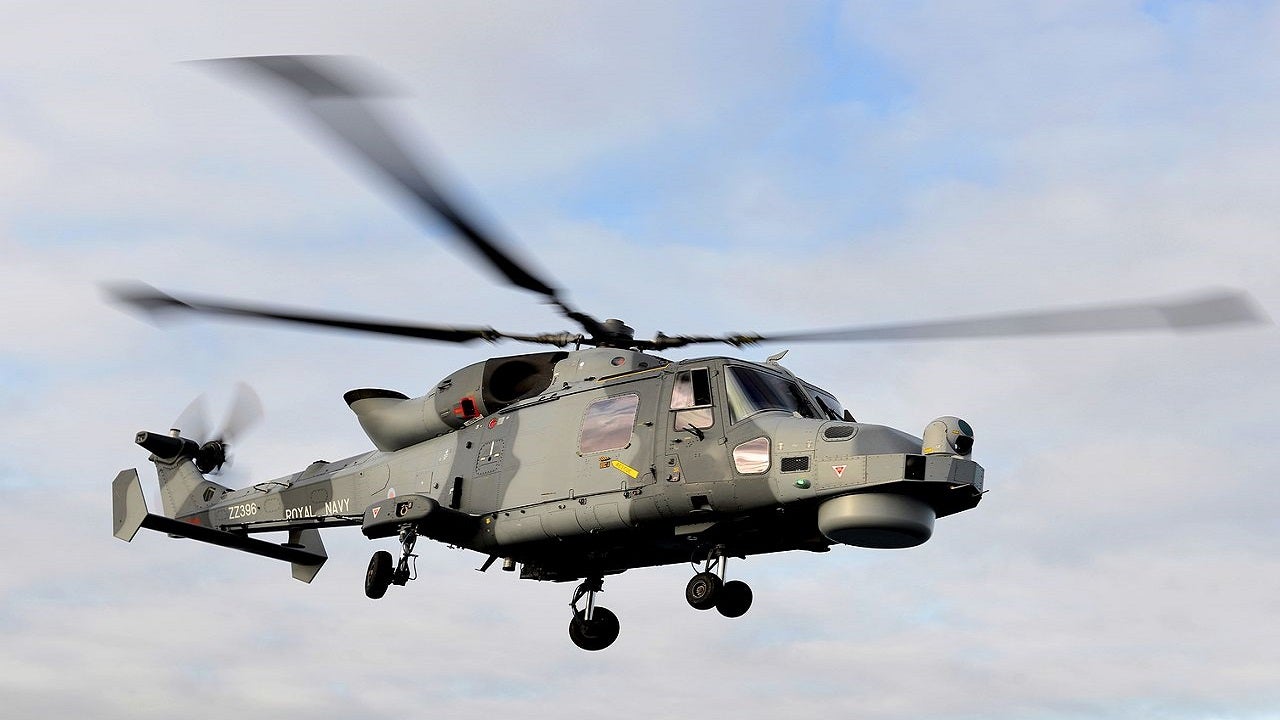
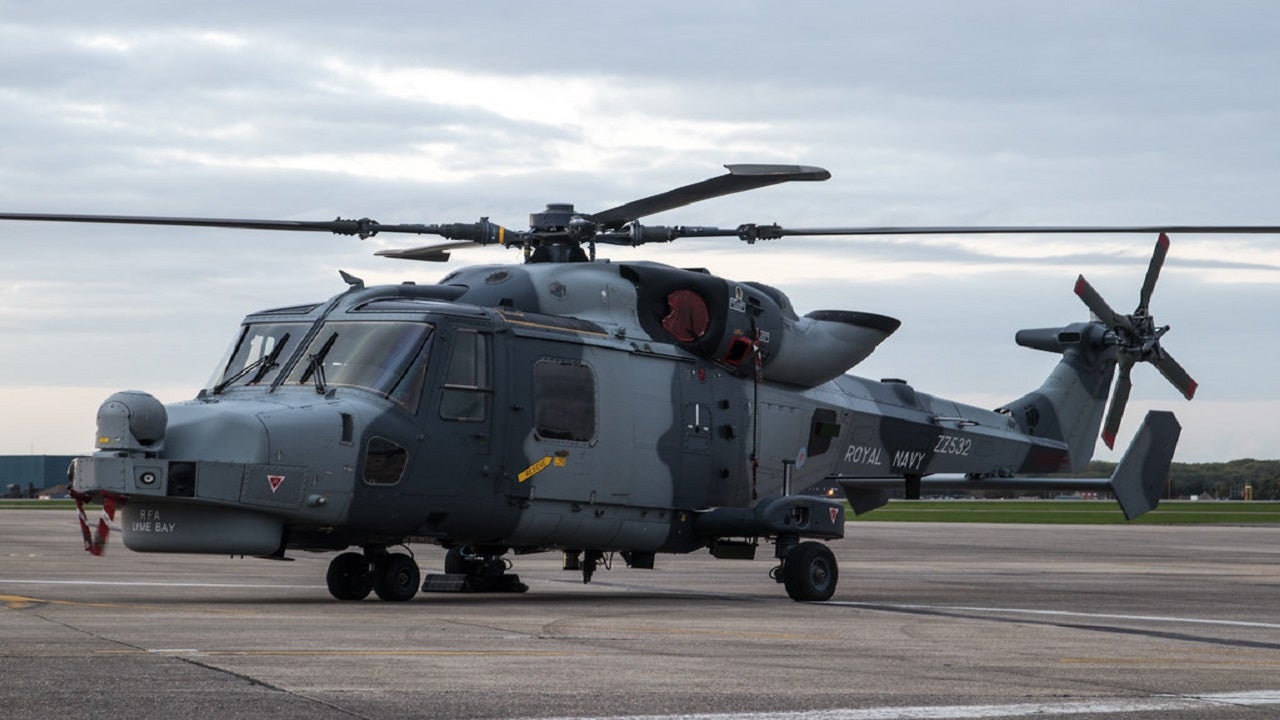
The AgustaWestland AW159 Future Lynx is the British Royal Navy’s new maritime surveillance and attack helicopter.
The UK Ministry of Defence Future Lynx programme replaced the Royal Navy Lynx HMA.8 and HAS.3, as well as the British Army Lynx AH mk7 and AH mk9 helicopters, which entered service in the 1970s. The AW159 is a more capable helicopter with reduced whole-life costs.
Recommended Buyers Guides

The Future Lynx was renamed as the AW159 in April 2009 and the UK military Future Lynx is designated the Lynx Wildcat. It has logged in over 50,000 flight hours.
The Royal Navy Lynx Wildcat can operate in blue water and littoral environments to provide over-the-horizon targeting for offensive and defensive surface and sub-surface warfare, surface surveillance and search-and-rescue. Unlike current RN Lynx helicopters, it can be deployed from smaller vessels.
Future Lynx is based on the current production version, the Super Lynx 300, which has an improved airframe and a new engine. It has an increased payload and an advanced avionics suite.
Orders from the UK Ministry of Defence
The UK Ministry of Defence announced the selection of the AgustaWestland Future Lynx for the Royal Navy’s surface combatant maritime rotorcraft (SCMR) and British Army’s reconnaissance helicopter (BRH) requirement in April 2005. The naval and army versions have a high level of commonality in airframe and avionics.
The UK MoD awarded a contract for 70 Future Lynx helicopters, 30 for the navy and 40 for the army (plus options for an additional five helicopters for each service) June 2006. These numbers were slightly reduced in December 2008 to 62, 34 for the army and 28 for the navy. The programme is valued at nearly £1bn.
Construction of the first Future Lynx began in October 2007. The helicopter made its maiden flight in November 2009, and first delivery was made in April 2012. The Royal Navy’s first AW159 helicopter completed its maiden flight in January 2013. The AW159 Future Lynx entered service with the Royal Navy in 2015 and will remain in service for 30 years.
In January 2013, the Korean Government placed an order with AgustaWestland to receive eight AW159 helicopters for the Republic of Korea Navy. The first batch of four helicopters was delivered to the Korean Navy in June 2016. Delivery of final batch of four helicopters was completed in December 2016.
In March 2016, Finmeccanica was awarded a €100m ($114m) contract to provide two anti-submarine helicopters to the Philippines Navy. The deliveries were concluded in May 2019.
More than 70 units have been delivered to the British Army, Royal Navy, Philippine Navy, and the Republic of Korea Navy.
Future Lynx construction and features
Both service variants of Future Lynx have a common marinised airframe based on the naval Super Lynx 300. New features include the new composite four-bladed tail rotor and low-set symmetric tail plane for improved flying qualities at higher weights, larger cockpit doors for ease of access, larger nose and redesigned rear fuselage to provide more space and easier access to the avionics bays.
The helicopter has been designed to allow for growth of the maximum all-up mass (MAUM) of the helicopter during its 30-year life.
The in-service date MAUM is 5,790kg, but with incremental upgrades, an out-of-service date MAUM could be up to 6,250kg. The nose and tail structures and undercarriage have been strengthened to allow for this extra weight.
The airframe’s manufacture includes monolithic-machined aluminium panels to reduce the component count and maintenance time. The airframe has a 12,000-hour fatigue life.
Survivability and avionics onboard
Several crashworthiness features have been incorporated into the design to meet the military 90th-percentile level for potential survivable crash case conditions. Survivability features include crashworthy and armoured crew seating, crashworthy passenger seating, a ‘role fit’ armoured cabin floor and wire strike protection system.
Future Lynx is also equipped with a Smiths Industries integrated health and usage monitoring system (HUMS) for improved safety and reduced cost of ownership.
Future Lynx features an advanced integrated avionics suite supplied by Thales UK, including dual digital automatic flight control system, GPS (IGI / INS) navigation system and attitude and heading reference system (AHRS).
Smiths Industries is supplying the four 10in x 8in multifunction liquid crystal displays (LCD).
The communications system is based on a Thales Avionics secure communications control system (SCCS) fitted on the Lynx HMA.8. The system provides plain and secure voice communication via the VHF / UHF SATURN and HF radios. Naval Lynx Wildcats are equipped with tactical data links.
Weapons equipped on the Future Lynx helicopter
The Royal Navy Lynx Wildcat is fitted with a new stores management system, carrier and weapons launcher. Weapons options include 12.7mm door-mounted heavy machine guns, 20mm cannon pods, unguided or guided rockets, air-to-surface missiles, torpedoes and depth charges.
The navy Lynx Wildcat is equipped with BAE Systems Sting Ray lightweight torpedoes. Future Lynx can also be armed with up to eight Sea Venom anti-ship missiles. This will be the UK MoD’s future air-to-surface guided weapon (FASGW), which will replace the Sea Skua missile.
FASGW is intended to be effective against corvette, fast-attack craft and smaller maritime targets, as well as on coastal ‘soft’ land targets.
Mission systems and countermeasures
Before a mission, a set of data is sent to the mission planning system (MPS). This includes mission orders, tactical airspace information, meteorological and geographical data. Missions may be planned for single or multiple platforms. Plans can be rehearsed in either 2D or 3D and altered to suit mission requirements.
The tactical processor that manages the mission systems has been jointly developed by General Dynamics (UK) and AgustaWestland.
In March 2007, L3 Wescam was awarded with a contract for the MX-15Di stabilised electro-optical laser designator turret for both the Royal Navy and Future Lynx army variants. MX-15Di sensors includes an infrared camera with three fields of view, daylight TV camera, image-intensifying camera with spotter lens for very narrow field of view, and a laser ranger / designator.
The Royal Navy Future Lynx sensor suite includes the Selex Sensors and Airborne Systems Seaspray 7000E active electronically scanned array (AESA) radar system. Seaspray 7000E is a multimode I-band radar that provides a 360° coverage. Modes include SAR (synthetic aperture radar), inverted SAR (ISAR)) and ground moving target indicator (GMTI) ().
The naval Lynx Wildcat is also fitted with an anti-submarine warfare (ASW) active dipping sonar.
The countermeasures suite includes Selex Sensors and Airborne Systems helicopter-integrated defensive aids system, HIDAS 15, and electronic support measures (ESM).
Engines of the AgustaWestland AW159
Future Lynx has the same LHTEC CTS800 engines as those already in service on the Super Lynx 300. The two CTS800 engines, each rated at 1,015kW (1,361shp), have 36% more power than the Gem engines on current navy Lynx helicopters but have a similar fuel consumption.
The engines are fitted with full-authority digital electronic control (FADEC). The CTS800 engines give the Future Lynx improved single-engine and hot-and-high performance.
Future Lynx has an endurance of about three hours with standard fuel and 4.5 hours with auxiliary fuel while being able to carry a payload 50% greater than the Lynx helicopters in service with the navy.
